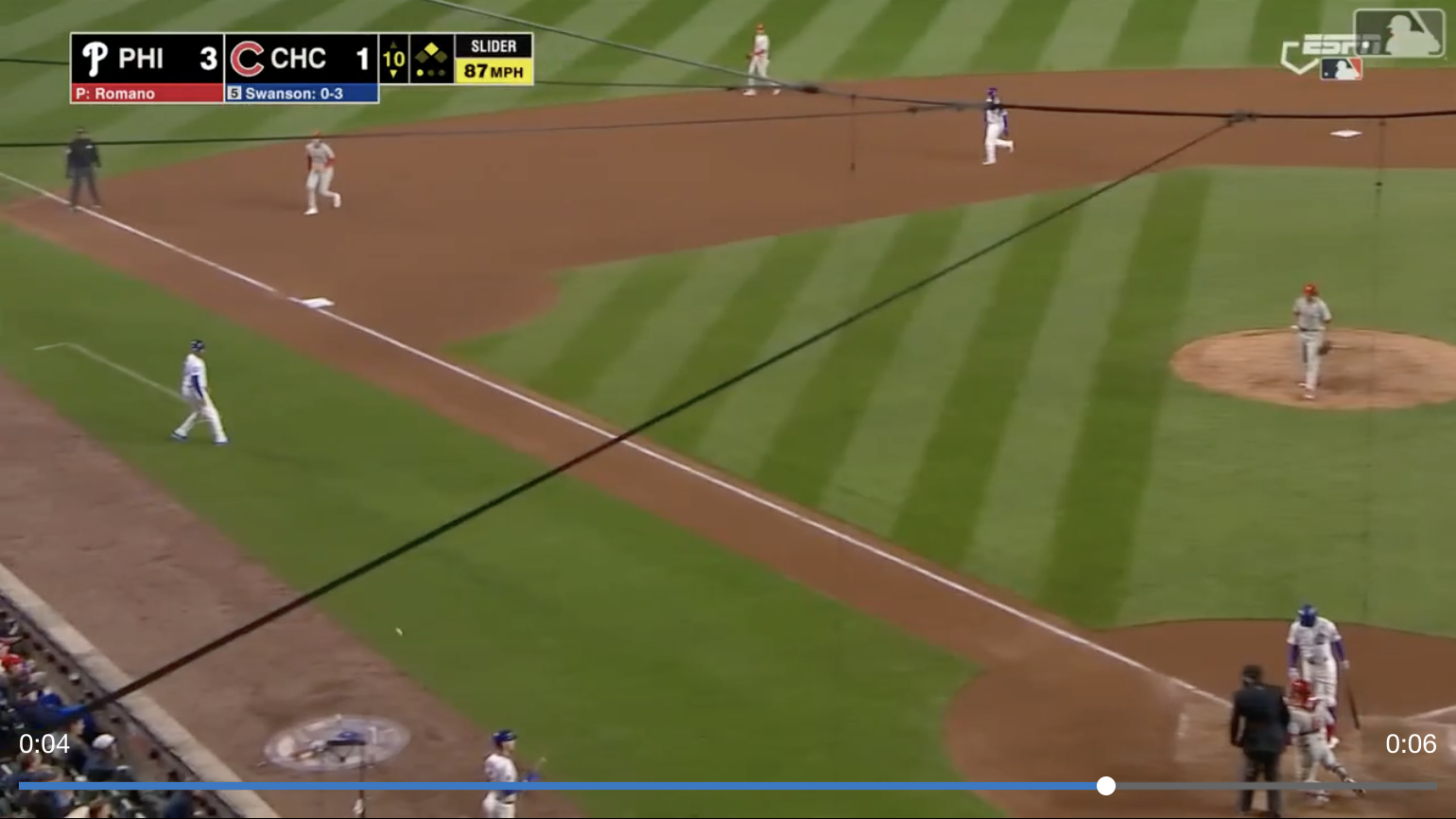
A ground ball skips foul on the third-base side of the infield of Chicago's Wrigley Field, while fielders and baserunners alike react.
A Ground Ball Goes Foul
As soon as a ground ball is declared foul, it becomes a dead ball. It’s usually not very difficult to tell that a ball has gone foul, but if there’s any doubt, the umpires will usually wait until the ball is touched by a defender, or until the ball crosses the first-to-third line before making an official call. To call a foul, umpires will point towards foul territory1, and to further reiterate that the ball is dead, they will usually also raise their arms to their heads with their palms out— perhaps as if they were behind held at gun point and had been told to stick their hands up, though that’s generally not the vibe of your average foul ball. Often, when a foul ball is very obviously a foul, umpires will skip the pointing and just stick their hands up.
Once the ball is declared dead, any runners who were on base will need to return to their original base before the next pitch is thrown.
Fair/foul calls can only be reviewed by replay if the ball bounces “behind” the spot where the base umpires usually stand. This means that most ground balls called foul cannot be subject to replay, as they will bounce in front of those same umpires.
A ground ball that goes foul will must be collected and removed from the field before play resumes. If the count had less than two strikes before the foul ball, then the foul ball results in a strike. If there were already two strikes, then the count does not advance on a foul ball— unless, of course, the ball was struck foul by a bunt. A bunted foul ball is always a strike, regardless of the count beforehand.